Chilika Lake — History, Best Time to Visit & How to Reach
Chilika Lake, on Odisha’s east coast, is Asia’s largest brackish water lagoon and the world’s second-largest coastal lagoon, spanning the Puri, Khurda and Ganjam districts. Fed by 52 rivers and rivulets — most notably the Daya and Bhargavi — its pear-shaped waters carry a history that runs from deep geological time through ancient maritime trade, medieval legend, colonial conquest, and one of the world’s most celebrated wetland-recovery stories.
Geological Origins & Formation
Long before any human record, Chilika existed as open water. Through the later Pleistocene period, the area now covered by the lagoon was part of the Bay of Bengal itself — marine fossils and sediment cores recovered from the region show the coastline once extended well inland of where it sits today.
The shift from open sea to enclosed lagoon was driven by two forces acting together: heavy silt carried down by the Mahanadi river system, and longshore currents that pushed this sand steadily northeastward along the coast. Around 7,000 years ago, a pause in the rise of global sea levels allowed a sandy ridge to begin forming near the lagoon’s southern edge; over the following millennia this grew into the barrier spit — over 32 km long — that separates Chilika from the sea today. Fossil shells recovered from the spit’s southwestern edge date to roughly 3,500–4,000 years ago, marking when the lagoon was effectively sealed off into the brackish ecosystem it remains today.
Local folklore offers a very different account of the lake’s origin. According to one popular legend, the pirate king Raktabahu planned to plunder Puri and anchored his fleet out at sea to stay hidden — but refuse washing ashore gave his position away. Furious, he ordered his army to attack the ocean itself; the sea surged back and drowned his forces, and Chilika Lake was said to have formed in the aftermath. This is a traditional story passed down alongside the geological record, not a competing scientific account.
Archaeological Foundations: Golabai Sasan
Human settlement around Chilika goes back to the Stone Age. The archaeological site of Golabai Sasan, on the Malaguni River (a tributary of the Daya feeding into northern Chilika), has yielded an unbroken cultural sequence excavated by the Archaeological Survey of India: a Neolithic phase (from around 1600 BCE) with polished stone tools and early pottery, a Chalcolithic phase (c. 1400–900 BCE) showing copper metallurgy and painted pottery, and an Iron Age phase (c. 900–800 BCE) with iron tools and more developed settlement layouts. Radiocarbon dating places the site’s earliest layers at around 2300 BCE.
Woodworking chisels and boat-shaped stone weights found at the site suggest Golabai may have functioned as an early boat-building centre — its inhabitants likely used Chilika’s calm, sheltered waters to test vessels before they ventured out through the lagoon’s outer channel into the open sea.
Ancient Maritime Trade & the Glory of Kalinga
For much of antiquity, Chilika functioned as a natural, sheltered harbour for the Kalinga Empire’s merchant and naval fleets (known as boitas). Under Emperor Kharavela in roughly the 2nd century BCE, Kalinga became a significant maritime power, and its rulers are said to have held the title Kalingaadhipati, “Lord of the Sea,” reflecting their control of the coast.
The 10th-century Brahmanda Purana describes Chilika as a hub for long-distance sea trade, sheltering ships travelling to and from Java, Malaya, Ceylon (Sri Lanka) and China — a detail that also tells us the lagoon’s channels were once considerably deeper than the shallow mudflats found in many areas today. Excavations at Kanas, a village about 25 km north of the lake, uncovered 7th-century ship anchors alongside memorial stones raised for warriors, suggesting the lake was also, at times, contested territory in the competition to control this trade.
This maritime memory is still marked every year through Bali Yatra (“Voyage to Bali”), when communities across coastal Odisha float small toy boats of paper and banana stem to commemorate the ancient Sadhaba merchants who once set sail for Southeast Asia on the northeast monsoon winds.
Medieval Legends: Maniki Gauni & Maa Kalijai
Chilika carries two well-known devotional legends from the medieval period, both still marked locally today.
The story of Maniki Gauni comes from a roughly 400-year-old poem by the saint-poet Purushottam Das, which describes Lord Jagannath and Lord Balabhadra pausing at Chilika’s shores while marching to war against the kingdom of Kanchi. According to the story, they were given curd by a milkmaid named Maniki, and repaid her with a divine ring — a tale still remembered in the shoreline village of Manikagauda.
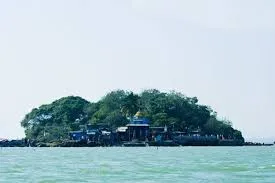
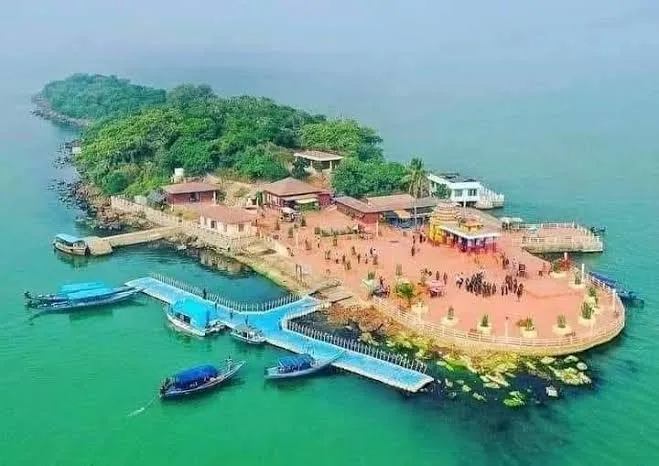
The island shrine of Maa Kalijai has its own local history: tradition places the Kalijai Temple’s construction in 1717, under a local ruler of Bankad (present-day Banapur). Its founding legend tells of a young woman named Jai, lost when her boat capsized in a storm while crossing the lake, after which she was said to appear to fishermen and was deified as the lagoon’s guardian goddess. For generations since, boatmen and travellers on Chilika have stopped at her island shrine before setting out, seeking safe passage.
The Colonial Era & Odia Literary Renaissance
Chilika’s maze of islands and channels made it strategically significant during the British conquest of Odisha. In September 1803, British forces under Colonel Campbell advanced toward Puri, aiming to break Maratha control of the region — a march complicated by Chilika’s difficult terrain, until local guide Fateh Muhammed showed British troops a route through the lagoon’s spits that bypassed Maratha defences. In recognition, the British later granted Fateh Muhammed freehold rights to the Malud and Parikud estates, a decision that shaped local land history for generations.
Later, in the late 19th and early 20th centuries, Chilika became a source of inspiration for Odia literature — the poet Radhanath Ray wrote his well-known descriptive poem Chilika on its shores, helping turn the lagoon into a symbol of Odia landscape and identity, while figures like Pandit Godavarish Mishra drew on the region’s history in the wider anti-colonial movement.
Modern Conservation: From “Dying Lake” to Global Model
In 1981, Chilika was designated India’s first wetland of international importance under the Ramsar Convention, recognised for hosting over a million migratory birds each winter along the Central Asian Flyway, from as far as Siberia and the Caspian region.
By the early 1990s, though, the lagoon was in serious decline. Heavy siltation — worsened by upstream deforestation — had choked its narrow outer channel to the sea, cutting off the natural tidal exchange that kept it brackish. Salinity dropped sharply, invasive freshwater weeds spread across its northern zone, and fish, prawn and crab catches collapsed, threatening the livelihoods of over 150,000 fisherfolk who depended on the lake. In 1993, Chilika was placed on the Ramsar Convention’s Montreux Record, a list reserved for wetlands in serious ecological decline.
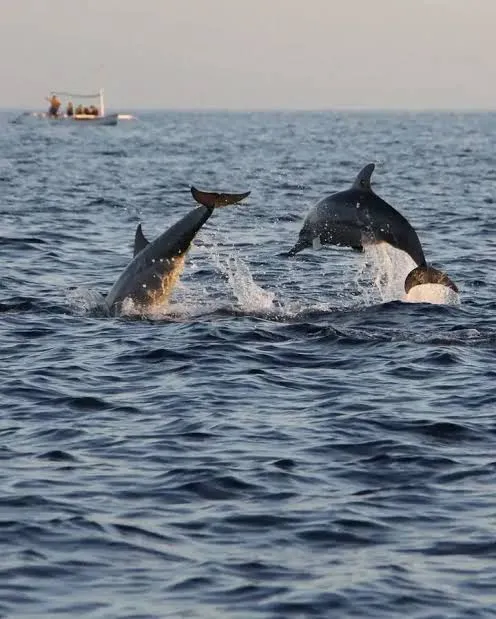
In response, the Odisha government set up the Chilika Development Authority (CDA), which — working with hydrological modelling from the Central Water and Power Research Station in Pune — opened a new artificial mouth through the barrier spit on 23 September 2000, shortening the channel to the sea and restoring the tidal flow almost immediately. Salinity stabilised, fish catches recovered, and the endangered Irrawaddy dolphin population around Satapada stabilised as well. In 2002, Chilika became the first wetland in Asia removed from the Montreux Record, and the CDA received the Ramsar Wetland Conservation Award for the turnaround. Today the lake hosts over 160 bird species each winter and supports the livelihoods of over 200,000 local fisherfolk, and is widely cited as a global model for community-based wetland restoration.
Chilika Through the Ages
| Era | Primary role | Modern legacy |
|---|---|---|
| Prehistoric & proto-historic (c. 2300–800 BCE) | Early settlement and boat-building (Golabai Sasan) | Foundation of Odisha’s coastal boat-building tradition |
| Ancient Kalinga (c. 200 BCE – 1000 CE) | Naval base and international maritime trade hub | The annual Bali Yatra festival |
| Medieval & colonial (1700s–1947) | Local kingdoms, devotional legend, British conquest | Maa Kalijai Temple; Radhanath Ray’s poem Chilika |
| Modern conservation (1981–present) | Biodiversity sanctuary and community-based wetland management | Ramsar-listed wetland, global restoration model |
Best Time to Visit
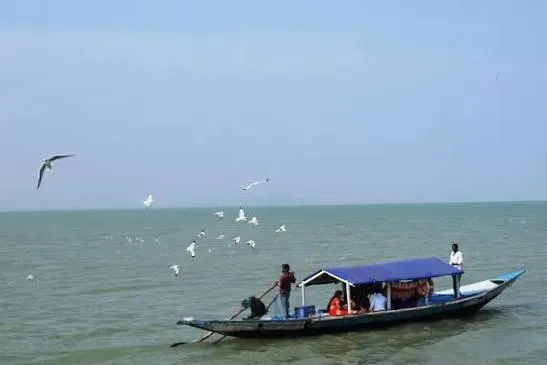
November to February (Peak Season): This is the absolute best time to visit. The weather is cool and pleasant (15°C to 25°C). Millions of migratory birds fly in from Siberia and Central Asia, and the calm water offers maximum visibility for spotting Irrawaddy dolphins.
March to June (Summer): Temperatures can soar up to 45°C, making daytime boat rides uncomfortable. However, it is much quieter and less crowded.
July to September (Monsoon): The lake receives heavy rainfall. Boat operations are frequently suspended due to safety concerns and stormy weather. Avoid visiting during these months.
How to Reach
Chilika Lake has three main entry nodes: Satapada (best for dolphins, closer to Puri), Barkul, and Balugaon (best for birdwatching and Kalijai Temple, closer to Bhubaneswar).
By Air: The nearest airport is Biju Patnaik International Airport (BBI) in Bhubaneswar, situated roughly 100 km from Barkul and 120 km from Satapada. Taxis and buses are readily available outside the terminal.
By Train: Balugaon Railway Station is the most convenient railway access point directly serving the Barkul side. For Satapada, visitors should disembark at Puri Railway Station and complete the journey by road.